
Cash Flow vs Appreciation: What Really Matters in Real Estate Investing?
One of the most common debates in real estate investing is whether you should focus on cash flow or appreciation. Some investors swear by monthly income. Others prioritize long-term equity growth. And many beginners get stuck trying to choose between the two, believing they must pick one path forever.
The truth is more nuanced.
Cash flow and appreciation are not opposing strategies. They are different tools that serve different purposes. And understanding how they work together is what separates average investors from long-term wealth builders.
What Is Cash Flow in Real Estate?Cash flow is the money left over each month after all expenses and debt payments are covered. It represents the immediate income generated by a property.
A simple way to think about it:Rent comes inExpenses go outMortgage gets paidWhat’s left is cash flow
Cash flow matters because it provides:monthly income stabilityreinvestment capitalprotection during market downturnslower financial stress
For many investors, especially those building portfolios early, cash flow is the foundation that keeps the system running.
What Is Appreciation in Real Estate?
Appreciation is the increase in a property’s value over time. It comes from:market growthinflationsupply and demand shiftsneighborhood developmentproperty improvements
Unlike cash flow, appreciation is not immediate. It builds gradually, often silently, over the years.
Appreciation matters because it creates:long-term equityrefinancing opportunitieswealth through leverageexit profits when selling
In many markets, appreciation is where the largest wealth creation actually happens.
The Key Difference Between Cash Flow and Appreciation
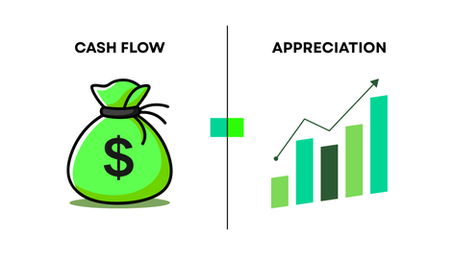
The simplest way to understand the difference:Cash flow = monthly income (short-term stability)Appreciation = long-term wealth (asset growth)
Cash flow is predictable. Appreciation is strategic. Cash flow keeps you in the game. Appreciation moves you forward over time. Neither is inherently better, they just serve different roles in a portfolio.
Why Beginners Overvalue Cash FlowMany new investors focus heavily on cash flow because it feels tangible. Seeing the monthly income is reassuring. It creates a sense of control and predictability.
But over-prioritizing cash flow can lead to:limiting yourself to lower-growth marketsignoring strong appreciation areasmissing long-term equity gainsover-optimizing for short-term returns
In some cases, investors avoid great markets simply because initial cash flow is modest.
Why Experienced Investors Prioritize AppreciationMore experienced investors often shift their focus. Instead of chasing maximum monthly cash flow, they look for:
strong job growth marketspopulation inflowssupply constraintslong-term rent growth potential
They understand that wealth in real estate is often created through:equity growthrefinancingportfolio scalingstrategic exits
In many cases, appreciation compounds far beyond what monthly cash flow can provide.
The Balanced Strategy: Why You Don’t Have to ChooseThe most effective investors don’t treat this as an either/or decision. Instead, they structure their portfolios with intention:
Some properties generate strong cash flowOthers focus on appreciation upsideTogether, they create balance
For example:Cash flow properties stabilize your portfolioAppreciation properties accelerate long-term wealth
This combination reduces risk while maximizing opportunity.
How This Impacts Your Buy Box StrategyYour buy box should reflect your preference between cash flow and appreciation.If your goal is cash flow:
stricter expense thresholdslower leverage tolerancefocus on immediate returns
If your goal is appreciation:flexibility on cash flowfocus on location fundamentalstolerance for break-even properties
This is why clarity matters before analyzing deals, your strategy determines your decisions.
How It Connects to Underwriting
When underwriting a deal, your focus changes depending on your priority:Cash flow investors care about monthly spreadAppreciation investors care about long-term trajectory
But both still use the same fundamentals:rent analysisexpense ratiosmortgage structuringconservative assumptions
The difference is not the math, it’s the objective.
Common Mistakes Investors MakeChasing only cash flow in weak markets - This can limit long-term wealth building.Relying only on appreciation without discipline - This can lead to overpaying or negative cash flow stress.Not defining a clear strategy upfront - This creates inconsistent deal evaluation.
Final Thought: Wealth Comes From Strategy, Not Just Returns
Cash flow and appreciation are not competing ideas. They are two sides of the same investment equation. Cash flow keeps you operational. Appreciation builds your net worth.
The investors who scale successfully don’t ask:“Which one is better?”They ask:“How do I use both strategically?”Because real estate wealth is not built from choosing one path, it’s built from understanding how both paths work together over time.
